Migrant Labor and the Christian Faith (w/ Adam Hambleton)
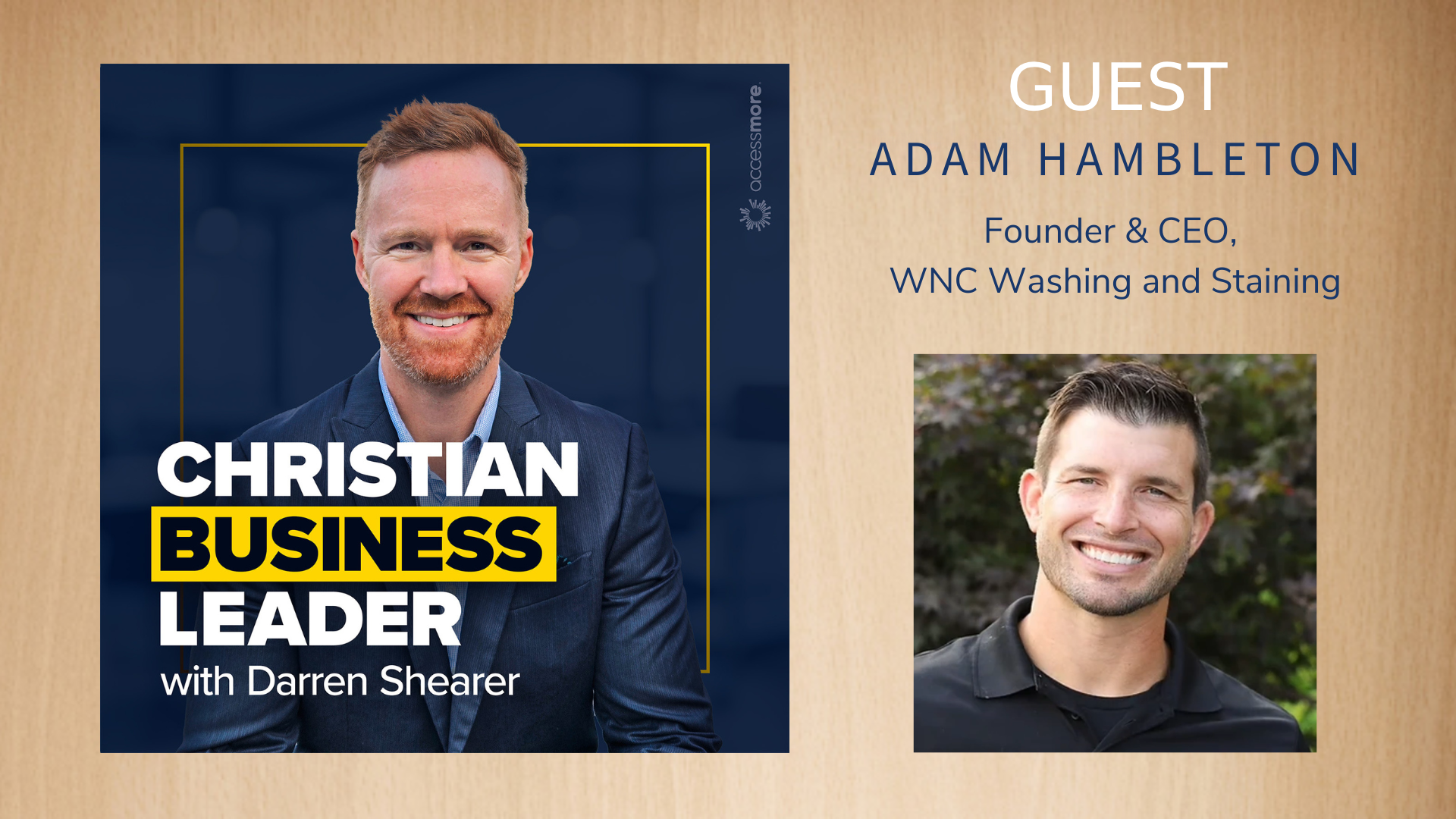
On this episode, we’re joined by Adam Hambleton, CEO and founder of WNC Washing and Staining, Hambleton Gardens, and Hambleton Services, which was voted #1 Landscaper of Haywood County.
Adam shares his experience with leading a predominantly migrant workforce and treating them with Christ-like love, care, and honor. Darren asks Adam how he would advise President Trump regarding his immigration policy.
Half of the Hambleton workforce consists of migrant workers from Central and South America, giving Adam a fascinating perspective on immigration policy. Adam consistently ensures that all his team members are treated with love and honor no matter their country of origin.
https://wncwashingandstaining.com/
Key Takeaways
- Adam Hambleton started his business at the age of 20, driven by a desire to operate ethically after experiencing unethical practices in a previous job. His background of financial independence shaped his strong work ethic and commitment to integrity.
- Adam emphasizes the importance of building relationships with employees, which transformed his leadership style. His faith, marriage, and church involvement have significantly influenced his business philosophy.
- A ‘year of gratitude’ taught Adam the value of giving, which positively impacted his business and strengthened relationships with employees. This practice became a cornerstone of his leadership approach.
- To address the challenges of seasonal work, Adam began hiring employees through the H2B visa program in 2016, which provided a stable and reliable workforce. This decision has been pivotal for his business growth.
- Adam employs a mix of local and immigrant workers, emphasizing the importance of building relationships and supporting the legal status of his foreign employees. He highlights the cultural and economic benefits of employing immigrant workers.
- Adam explains the legal and financial complexities of hiring immigrant workers, including the need to demonstrate a local labor shortage and the significant costs associated with housing and government fees.
- Adam reflects on the importance of humility, discipline, and family time in maintaining a sustainable business. He believes that true happiness comes from relationships rather than financial success.
- Adam plans to implement a profit-sharing model as part of his exit strategy, ensuring that long-term employees benefit from the business’s success. This approach aligns with the communal values of his workforce.
- Adam shares impactful stories of helping flood victims, illustrating how his company has positively transformed lives and renewed faith within the community.
- Adam emphasizes the importance of experiential learning, particularly for children and employees, to foster understanding and personal growth. He believes firsthand experiences are essential for meaningful education.
Christian Business Leader is the show for marketplace Christians seeking to explore and apply God’s will for business. If you want to learn more about how to do business for the glory of God and shape culture through discipling the business world, this show is for you.
Full Episode Transcript
Heads up: This transcript was created with AI, so you might notice a few typos or small mistakes. We recommend listening to the episode for the best experience!
SPEAKER_01 0:05
Welcome to the Christian Business Leader Podcast, where Christ-following business leaders explore God’s will and ways for business. This show is the ministry of the Center for Christianity and Business at Houston Christian University and features conversations with today’s Christ-centered business leaders who are representing Christ faithfully in the business world. I’m your host, Darren Scheer. And if you want to make your work, leadership, and company’s culture more Christ-centered, you’ve come to the right place. On this episode, we’re joined by my good friend Adam Hamilton. Adam is one of the most admired CEOs in our community here in Haywood County, North Carolina. He’s the founder and CEO of WNC Washing and Staining, which stands for Western North Carolina, if you’re not familiar. Hamilton Gardens and Hamilton Services, which was voted the number one landscaper of Haywood County. And he just has an incredible heart for people and kids. He’s active in the kids’ ministry at his church. I know we’ve uh had our boys on the same basketball team. And it’s just been a real joy to get to get to know him and see God really prosper his business here in our area. And and he’s not only serving customers, but is really the pastor of uh a large workforce of great people. And uh he’s gonna tell us about that today. Adam, welcome to the Christian Business Leader Podcast.SPEAKER_00 1:39
Thank you, Darren. Thank you for the introduction and thank you to all the people that have chosen to listen to this thing. Indeed.SPEAKER_01 1:46
Adam, when did you first realize God wants to be involved in your work and business?SPEAKER_00 1:50
I would say definitely, as soon as I started it, I I was so solely dependent on God, even though I didn’t know him in a relational place. I didn’t I knew of him, and I had a heart of like, you know, if I do some stuff for people, uh he’ll like take care of me, you know, maybe it. But it certainly developed when I when I uh when I came to the Lord and I uh had my testimony and and that happened about when I had finished uh my college and I was about four years into my business, five, so before I accepted the Lord into my life.SPEAKER_01 2:28
Got it. And and and so what changed um in terms of how you approach business?SPEAKER_00 2:33
I would say when I started, I was 20. This is 15 years ago, I’m 35 now, and it was 2009. I didn’t have any bills, I didn’t have much responsibilities. I really just knew the guy that I was working for uh really wasn’t ethical. And I wanted to be ethical, I wanted to do what I wanted to do without answering silly questions. So I started that. Like what was unethical? He was asking me to to cover up some of the winterization frost, frost uh frozen pipes for some of the houses, and and he was cutting my hours and I was over-delivering for him, and it just it just kind of really bit me over a period of time because I wanted to do my very best. And that kind of came from growing up with having to fight so much. You know, we had I paid for my school supplies in high school, I paid rent, I paid for my own car and managed my money while working over the summer to pay for my yearly expenses. So after I got to a place where I felt comfortable and confident enough, I just took off and I haven’t stopped one day since. Uh, literally had something to do every day. And I be really took the leap of faith hiring my first employee um second year in, was very oh highly um uh I was just critical of everything that they did and uh really did not look at the person. I looked at more of the the what they could do and their outcome. And then I began to build relationships. I met my wife, that took a huge change. We she had a four-year-old daughter. I grew up real quick, began going to New Covenant, and I met new, I met uh Pastor Nick Hunterkin, and I began to begin involved into the children’s ministry. But really importantly, this is the craziest thing I I’ll ever remember, but he taught us the year of gratitude, and we gave away a new covenant,$250,000 worth of the savings, and he taught us how to give away. Samantha and I gave away stuff just out of the just out of joyfulness, and he began to repay us with steady employee workforce or people that would forever be thankful for you when they thought of your your name or would be ever changed because you took the time or the resource out of your pocket to give it to them. And we started tithing, which is something that uh I was not doing. Uh, I started paying my taxes like we’re supposed to pay, and not trying to cover from the government or getting underneath and and and doing things right and being honest. It just has its own way of reward and um compounding that with employees. Um, I’ll go into that too. You know, I’ve made a big change because I wanted to grow my business here in North Carolina. We we fully uh depend on tourism and and things of that area in the mountains, but in the wintertime it is super slow. 75% of our work are drops right off the box because everybody goes to Florida and south and in the warmer temperatures. So I said we had to figure something out, and um, I took a big leap of faith in 2016 with an HTV visa program. I prayed. I got five men that were um I applied for it was a huge process. It was probably about 15 to 18,000 then to get that process, and then I had to find a place for them to stay. I had to provide transportation, I had to provide them driver’s license courses and tests, and I began to build relationships with four of them. Four of the five, and the other fifth one I fired that that year, but four of the five are still with me today. And not only that, but at least four to five family members per person work for me now as well. They have their own subgroup, they have their own line enhancement. One has a uh rock and stonemason crew, and his brothers come to work and his nephew, and you know, so it’s really building a tribe and a culture around getting people out of poverty and into a really good job that they can learn to save their money. They can have goals and dreams and be more disciplined, and I can hold them accountable. We have a different idea here that we’re not competing so much, but we’re more or less supporting each other here. And we give each other a hard time, but we celebrate a lot. And we we um we also initiated, you know, last two years ago, we initiated a monthly bonus. So everything it would tie directly to the net profit of the month at that. And um, we’d split a portion of the net findings or the net profit for the whole group, everybody that’s on the workforce, not the administration, just the workforce team. And so they’re getting, you know,$300 to$600 a month uh during the seven months of the busy season. And everybody’s pumped. We’re having parties uh, you know, about every quarter uh to celebrate and to build that relationship. So um that’s how many employees at this point? Well, um, I would say in the fall, in the fall, we at November we had 55 with all three companies between the gardens, had about seven, and the other two were split between the staining and landscaping. Um, this year we are planning on having at least 65. So um 10 of those will be new visas, and um eight of which have never been here before, which will need full training, but all of which are family, not friends or not close, but actual family of the people that are here. So it makes for just interesting. It’s fun, it’s exciting, it’s culturally different. Yeah, pray every single day when we go to work here. Um, we get in a big circle. It’s actually kind of amazing. We um started that four years ago, and I was shaking like a leaf and worried about it. Um, but ever since then, it’s drawn some sort of camaraderie for our group, protection on the roads. There’s just things that I told them one accident with one truck can change everything. And um, being safe and being responsible, being the best, being highly valued in the community has its benefits, not just of status, but godly benefits and community. When when the disaster struck, our teams went to work when there was no cell signal. People needed it, we just didn’t even have to go anywhere. And um they volunteered their time. I wish I could tell you I get the credit, but they went out and they did that, and we did that back in the last flood, too. It’s just it’s a culture, and it’s something that the people know that they can be a part of and trust and be disciplined and they can be uh confident and secure enough to stay.SPEAKER_01 9:57
Yeah. So out of your 55, uh I think you said you have 55, and you’re going up to 65. What percentage of those uh employees are coming from Mexico and uh central other central South American countries?SPEAKER_00 10:12
It’s 50 percent about 50 of our workforce is local, 50 is come in from um El Salvador, Guatemala, and mostly Mexico. Okay. Um, but um interestingly enough, they um they know each other, they have a great communication, and I go visit with them here and there. But the people that are here locally, we’ve worked to get green cards, we’ve worked to get um lawyers and status and uh reconcile their um uh poor uh passport or uh passports, etc., get driver’s license. So there is a there is a um a distinct difference between the HGB and the local uh as far as the time spent here, but otherwise, their family. Yeah, when they come back, they’re we’re all excited, we’re jazzed and go back to work.SPEAKER_01 11:09
Yeah. Speak to our our listeners that they they hear the the immigration narrative, and of course the inauguration, and now uh the ice is getting ready to go on the war path, uh, you know, to um send everybody back to their to their home countries and they’re supposed to stay there. Um can you just address that narrative from your perspective as a Christian businessman who 50% of your workforce are are coming from from other countries? And again, the narrative is well, you’re taking away jobs from our our local economy. Like, how do you respond to that?SPEAKER_00 11:54
Yeah, that’s uh that’s interesting. What what I recall or what what statistic grabbed me um from uh the USCIS is every for every three immigrant workers creates one American job. And the reason is because the Americans are not willing to do the work that we need to do, that the customers are willing to pay for. Bottom line, there is not a soul on this county that you can put them up and you can put them up in the same truck and you can have them put them face to face and race and go do the same work. They can’t compete. So um, to speak to um why I use it, and uh I use the H2B program because these folks come and they’re making maybe$20 a day for a 12-hour day of picking corn. And when I mean picking corn, it’s as fast as you can move your arms, and they paid maybe 120, 200 pesos per per bushel or something, you know. Um, and so um, as far as the process, I started using that process, it cost something this year. Um, we spent over 50 to 60,000. We have to house them, we have to create a whole business structure around that. That’s a wasted cost. You have to factor in spending$60,000 to the United States government or different parcels of the government in order to get them here for seven months and do that year after year. And it still pays for the$70,000 you would have lost in. I mean, it could have been three trucks they broke from not checking the oil. It’s just something so simple. There’s so many different variables to keeping things humming. Um, and I built this business with the Lord’s help and guidance, but I had no idea I’d be using HGBB since I didn’t plan this out. At 12 employees, I said, that’s it, I can’t do any more. I’m like finished, I’m toasting. This is all I can do. But I grew and the people grew. And when you bring a group with you and you change instead of my goal, is not the work. I mean, I know we have great work. My goal is the people. I that’s what I go out. I love to go out every single morning and look every single person in the eyes and speak to and shake hands with every single person and say good morning and see what’s going on with them. That’s my job. I get fed by seeing what kind of danger they’re in, what kind of thing needs they have, what kind of what are their eyes bloodshot, you know, or you know, are they are they um sad? You know, I can literally pick up so fast on people and see what’s going on and pull them aside. And it’s almost it’s the Holy Spirit tugging on you. And as soon as you’re developing that, it’s a skill, it’s a God-given skill, and and it takes so much time. There’s there’s so much indirect training that goes into knowing all these people and knowing that they have your back or they don’t, or they have your best interests, or they’re having a hard time. There’s just so many different facets you can’t control it all. Yeah, and bringing Jesus to the center of it all gives hope. It might just give that little bit of umph that they need to get through their day, and you can’t monetize that. Um, people can live with very minimal needs met, and so the money it’s one thing, but once you get the money, you know that it’s it’s not the money. You’re like, wow, happiness is drawn in relationship, and our father is calling us to a deeper relationship with him if we were to be more obedient and um have a deeper relationship with him, and that takes time. Uh you cannot you cannot just jump in and take a class and win that. You have to go through battles, you have to go through some things that you think that it might be over unless you fix it. We don’t know what it’s gonna be like unless you do it. Yeah, and knowing other people know that you’re you you have that mentality, catching them when they make a mistake and going to fight for them in court, um encouraging them to pay their taxes. Look, you are here, you some of you might have come illegally, okay, but we’ve worked hard to get you a tax ID number. File your taxes. Every person have you filed your tax. Donald Trump has has uh come on stage and he says, we are gonna give people the opportunity to get their college degree. I don’t know if it’s the same language, I don’t know if it’s four degrees, I don’t know, but he said we want to keep the rest and set, he wants we want to keep the best and send the rest. And to me, I think that the people that are here both contributing to tax and and in the community and helping, like my workers were out there cleaning out people’s uh muddy messes, fish underneath the houses, and and with a smile, no one else would be willing to do that. In fact, we saw grandchildren and middle-aged men watching us do the work, fully able. It’s a mentality, yeah. And we culture together and we look at each other and we say, look around, everyone. We are all we have. If we get in trouble, there’s no one coming to save us. We need to be on the same team. It’s not it, it’s not a secret. If we don’t have that kind of mentality, somebody else is gonna come in and rob our henhouse, somebody else is gonna drive us into the dirt, somebody else is gonna be more advantaged, or they’re going to uh, you know, whatever. But um, so that’s that’s kind of that. I uh as far as the immigration goes and the H2B and coming over from border to border, I think doing it the right way costs dozens of thousands of dollars. Is it worth it? Yes, if you manage your money well or you manage God’s money well, yeah. So anything’s possible. Is it easy, simple? Is it no way? It’s a lottery system. We have to put our name in a hat, and and the USCIS shakes the hat and pulls out A, B, C, or D or E and F. We got D last year, put our guys here in June, in May, middle May. I mean, grass starts in April. So we had to really take our 20 at then was like 22 guys and move them over to landscaping. And I’m like, could you imagine going to your job? And the next day you wake up and say, Hey, your job’s not your job anymore. You got to do this job. You know, you may not have any experience, or you know, we might have to fake it a little bit till we make it. And we’ve had guys here for several years that have worked both companies. So it’s not like I’m sending people to do dangerous things, but you have to do a different job in the spring when it’s cold instead of you’re used to painting and standing outside when you’re on one job. So um we have a different culture. And um, I would say that staying humble, staying at the top, staying laser focused and disciplined, and able to keep family time and show all your workers that you got it together, you it’s not sustainable if you don’t do it right. Yeah, it’s just not.SPEAKER_01 19:42
I love how your tagline on your truck says, we show up, and and you guys do show up, and you’re willing to do things that that we just don’t have enough people around our community to do. I mean, I was telling you about that that cabin we’re building, and it’s on a really steep slope where the porch footers have got to go. And the concrete guy was just saying, you know, we we’re gonna have to try to get our excavator out there on that slope, but then it’s gonna take out your slope because the excavator is six feet wide. Well, why not just use shovels? He’s like, Oh, well, we’re not you we’re not doing that. You’re gonna have to find somebody else to pick up a shovel, and uh that something well, something else we’ll have to talk about offline is I need some guys willing to pick up shovels, uh, because we don’t have enough people in our country willing to pick up shovels anymore. I wanted to ask you too, um, based on what you’ve learned about what Trump is planning to do, how how will these policies impact your business specifically?SPEAKER_00 21:00
I don’t think they’ll impact our business specifically at all. It does put fear. I mean, the Border Patrol was here, and the community gets nervous. There are legal people that are here that have made families that have made communities that are strong involved. But do they come and stop by? Like no, they were here and and they were specifically here to help with flood. So, um, how President Trump is going to execute this in my mind would be start with the criminals, start with the difficult people, the people that are not can’t maintain the law. And the people here would agree in my company, they would come in and they would say, Yes, we agree with that. If you don’t keep the law, you can’t stay. Yeah, you know, and and you know what’s interesting enough, Darren, something I learned about uh Mexican people that have traveled here, especially adults, and they’ve stayed here for any number of time. Every Mexican person dreams to go home back to Mexico. They don’t like our culture, and frankly, our culture. Is disappointing to them. We do not keep family at the high, um, highest point of our pyramid. We don’t keep God um out there at the top or divorcing more rapidly. And they have a culture of keeping people home, multiculturals, because of the deficit in their income, it’s kept their relationship stronger, which is unbelievable to me. Uh, to know that the real important thing in life is to me, is people. And if you’re um if you’re having too much money and that money’s driving you apart, uh what else is the alternating factor? You know, is it is because they have cell phones, we have cell phones, it’s it’s a cultural change.SPEAKER_01 22:47
Yeah. So if President Trump came to you and asked you to advise him on his immigration policies and how they impact small businesses like yours, what would you tell him?SPEAKER_00 22:59
I would say uh I’m not qualifying, and I would probably think I would say you are. I um I would have a different approach. I would start with absolute criminals. And um obviously, where are they going to deport these folks? What part of Mexico? I know in Chiapas there’s a war going on between for the border of Guatemala and Mexico. There’s no Mexican police there. There’s two cartels, and they’re fighting to the death. And people there don’t have freedom to go to the hospital. They don’t have freedom to call their neighbors, they don’t have freedom to go out and walk the streets, they don’t have freedom to go to school, they have to pay a tax to live there. So many different things are happening right there in Chaples. Where are they going to send hundreds of thousands of people in Mexico? Secondly, that’s something I don’t know. But I would start with the people that are breaking the laws, that are making difficult, um, uh, nefarious decisions here. And then I would get people that are here paying taxes, showing that they’re uh involved in the community, some way to get amnesty or to become a citizen, as our ancestors did when we fled from Scotland and Europe and different places around the country. And so um, that would be what I but I think they do need to learn our our laws. They, Mexican people, and and um they need to learn our culture and how we communicate with one another and how our quality of living is, it’s very different, and so that can be taught. There’s things in our school, in our public school program that we don’t teach how to be adults, you know. So I can go into all that and go down, but it starts with education. And I go to Mexico for my education, I want to see what they live like. I had no idea. I came back with a humility of, you know, uh, it’s not just things, it’s what have you sacrificed in your family? What kind of broken family do you have now in the pursuit of what you thought was happiness? It’s a huge humbling feeling to have someone work their whole year and spend half their salary on a quince and yeta for their 15-year-old daughter out of just pure love, and a thousand people came. Um it’s unfathomable because you just love so much that that it’s just the monetary things become what they are things, yeah.SPEAKER_01 25:42
You know, so you you shared with me, and and I don’t know how much of this um you feel at liberty to to talk about on the on the podcast here, but uh a very unconventional exit strategy that you have in mind for your company. Um can you share with us about that?SPEAKER_00 26:03
Yeah, I changed my focus about I’ve never been really tied to money. I I literally grew up across the street through that window in those mobile home parks. You know, I grew up there and um I get to look at that and I think we have people here that we have given away homes, so many cars, helps loans for cars and different things that they never thought were possible. People that have gone their life without ever owning a house and they own their own home and paying lot rent somewhere. So um, to say that the culture here is so different, it has to do with the people, and changing it to be about the people is more to me about learning them, focusing on them, building your business around them. And so part of that is I don’t want to be running this forever. I sell and I sell well and I’ve enjoyed it, and I meet clients, and it’s not my passion. My passion is people. Well, I have the opportunity to show the world, or at least Haywood County, that someone can be successful, they can do it within 10 or 15 years. That’s a lot, but uh, I’ll get better at it. And then they can turn this business over. What I plan to do for both the landscaping and the steaming company for the people that have been here for so long, we’re gonna turn over the companies to them. And they’re gonna we’re gonna sell the assets, but all of the clientele, all of the profits will certainly go to them and be split. And the people that are at the top that are helping consistently um are gonna have a more percentage than the people and so forth and so forth. So the drivers, the the crew leaders, etc. Um, and as far as um that was originally seven years, and we have five left, but I believe we can do it in three. And um we have a great gentleman and his wife that work here that are going to be the future of the standing company and the bookkeeping. We have another gentleman who’s the future already of the landscaping company. And once they get a little bit more training, I’ll be able to stand back and watch how it operates and then go and do the same thing over again with another group of people, or take a group of people with me to go do something different in another area and turn it over for them, or start a satellite location. My goal is to turn our workers into employees where everybody’s working on a profit style, and then that way the people in the community could maybe spread, you know, it that it could be contagious, and other employees may create some sort of residual income for themselves so they can turn their business over and be done with it. Return.SPEAKER_01 29:01
I know to me, in my western mindset, that sounds just wild. Uh, but I would think that for your employees who are coming from you know South America, where it is more of a communal type of uh worldview, that that that probably isn’t so foreign to them, right? I’m sure they’re very grateful. I mean, that you would be willing to to do this, especially what they know about uh Western culture. Uh, but um, I mean, are are they just is this like a so you’re not talking about like an earnout or a buyout, like you’re just this is just a you’re giving the company away with the selling of assets, with the selling of that.SPEAKER_00 29:50
What does that look like? 24, 26 trucks and other different things that are gonna be accumulated in value, but so you’re gonna sell the asset for your for your family, your retirement, you’re keeping what the the land for the land for the rent, and I’ll get a little bit into that. Um, my goal was to create residual income. And um, as soon as I got to a place where I felt comfortable, it was time to do that. Um, but believe it or not, Darren, they don’t believe me. That’s part of the culture they have been lied to. When they see us or when they walk into somebody and they look into their eyes, sometimes people say what they think, and it hurts. And they’ve been done that so many times that just one man comes in, and even with five, 10 years of consistency, you’re not gonna change that mindset, even if I go visit with their family until I do it. And this last year I broke through to the one of the most top people in our in our um in our um in our company, and uh I said, the difference between me and you is I trust you. I said, I’m ready. I said, I will do what I say. Have I done what I said so far? He said, Yes. And um, so that is kind of like that’s kind of like the topping on the cake. When I do it, it’s gonna be like a stamp. It’s gonna be like it’s done, you know. And it’s gonna be like, I told you, you know, and so now you have to go do that. And my goal was that when I die, people are changed forever. When they get done, they’re like, wow, you know, I’m gonna go to his funeral, I’m gonna, you know, I just love that man. He helped me. And so um, coming from nothing financially and having a burdensome upbringing with a lot of people helping and Western North Carolina and changing who I am and God’s help, etc., that’s my I think that’s cool. That’s a legacy move. Yeah, I think it’s gonna be contagious, yeah.SPEAKER_01 32:01
Well, we’ve we’ve only had one story on this on this show that I could think of that is somewhat similar, and that would be uh Alan Barnhart, the um founder of Barnhart Crane and Rigging, which is a billion-dollar company, and they gave the entire company away to a charitable trust that gives to you know different Christian ministries, and um, and they they capp their salary at uh, I mean, very low early on, and they made that decision very early on. Um, but this is not giving it to a charitable trust. It’s gonna give the money to a lot of other things outside of the the company. You’re talking about actually giving it to the people who are already working in the company.SPEAKER_00 32:54
My goal was to ensure the quality. Yeah, if I left, I could not ensure the quality would be good unless the the the income or some sort of benefit comes up. Yeah, loyalty is gone, I’m gone, the headship is gone a little bit, you know. Yeah.SPEAKER_01 33:10
So Adam, what’s a story? What’s one of your favorite stories that illustrates the impact being made by your company? Whether whether it’s internally with your team or several.SPEAKER_00 33:23
Um, most recently were were the flood victims. We had a gentleman way off in um oh, what was it, West Fork or Little East Fork? And he had two homes. We had him as a customer, actually. It’s a what’s so ironic how God works. And um, he made a phone call, he barely got a phone call out in Asheville to us and said, Adam, you know, we’re we need some help, or houses are flooded. My I’m homeless, I’m in a hotel, my other home flooded. This man had three homes to nothing with no flood insurance below. So it’s very um, he said that God used you because I asked him to. I said, He said, I need I wanted him to wreck me and to change me from the inside out, and it took me losing everything. And he said, When you called and your team showed up, he said, I felt what God’s really love really was like. And he said, I’m 50 years old, I’m a grown man. I thought I was a he said, I thought I was a Bible-loving Christian man, and I was walking around as a false prophet. And he said, I you truly awakened me, and we prayed. And then we got another story about another two folks that were uh were just randomly on Jonathan Creek. They, you know, you didn’t know, there were just people that got hit, and they were one of them. The water was coming in, the neighbors helped them get out, they lost everything there, and he is battling cancer, and she, which I’ll keep them uh named, is battling a heart surgery that’s coming up. So both in pretty bad shape, but learning later, the guy helped build the North Carolina Arboretum. He was the builder, he was the lead builder, and he just happened to land in my vicinity, and he called and and we came in there and we took everything out of their home when they felt so defeated. And same story, that man’s life has changed. He said, I know I will be going to heaven now, Adam. You know, it he we we’ve seen each other and he cries and he holds, and he, you know, it’s just God’s love. It’s changed him forever. What a what a way. What what something you you can go now, you know, it’s done. You’ve done something, you know. And that’s my goal, taking my kids out there, taking the workers out there. It’s an education that you think you know, but you don’t know until you do. Yeah, and that’s it. You gotta go, gotta go and get it.SPEAKER_01 36:19
So wow, love it, Adam. Man, thank you for what you do in the kingdom, for our community, and for how you’ve blessed me and our listeners today.SPEAKER_00 36:29
Yeah, thank you for letting me share. I feel I hope I didn’t offend anybody out there.SPEAKER_01 36:33
I I really uh no, we like to offend people. Uh uh, so it’s uh okay, cool. We all yeah, I mean, if you’re listening to this podcast, you like to get your feathers ruffled a little bit. I I hope uh that’s that’s what we that’s what we need to do, right? Thanks again, Adam. Appreciate you, brother. Thank you, Darren. Thanks for listening to this episode of the Christian Business Leader Podcast. Be sure to subscribe, leave a review, and tune in for the next episode as we continue exploring God’s will and ways for business.
BIG THANKS to this episode’s sponsor: High Bridge Books
High Bridge Books helps Christ-centered authors build a legacy by crafting and publishing messages and stories that glorify God in all spheres of culture.
- High Bridge Books’ professional book publishing package: https://www.highbridgebooks.com/publishing/
- High Bridge Books’ proofreading, line editing, developmental editing, and co-writing services: https://www.highbridgebooks.com/editing-and-proofreading/
- Examples of our books: https://www.highbridgebooks.com/bookstore/
We’re extremely proud that …
- 45% percent of our 204 books under contract were written by authors who have published more than one book with us, and
- 51% percent of our books under contract were referred to us by authors who have previously published with us.
Contact High Bridge Books’ CEO Darren Shearer at [email protected] to get a conversation going about your book!