How Hobby Lobby Reflects God’s Character (Interview w/ Mart Green)
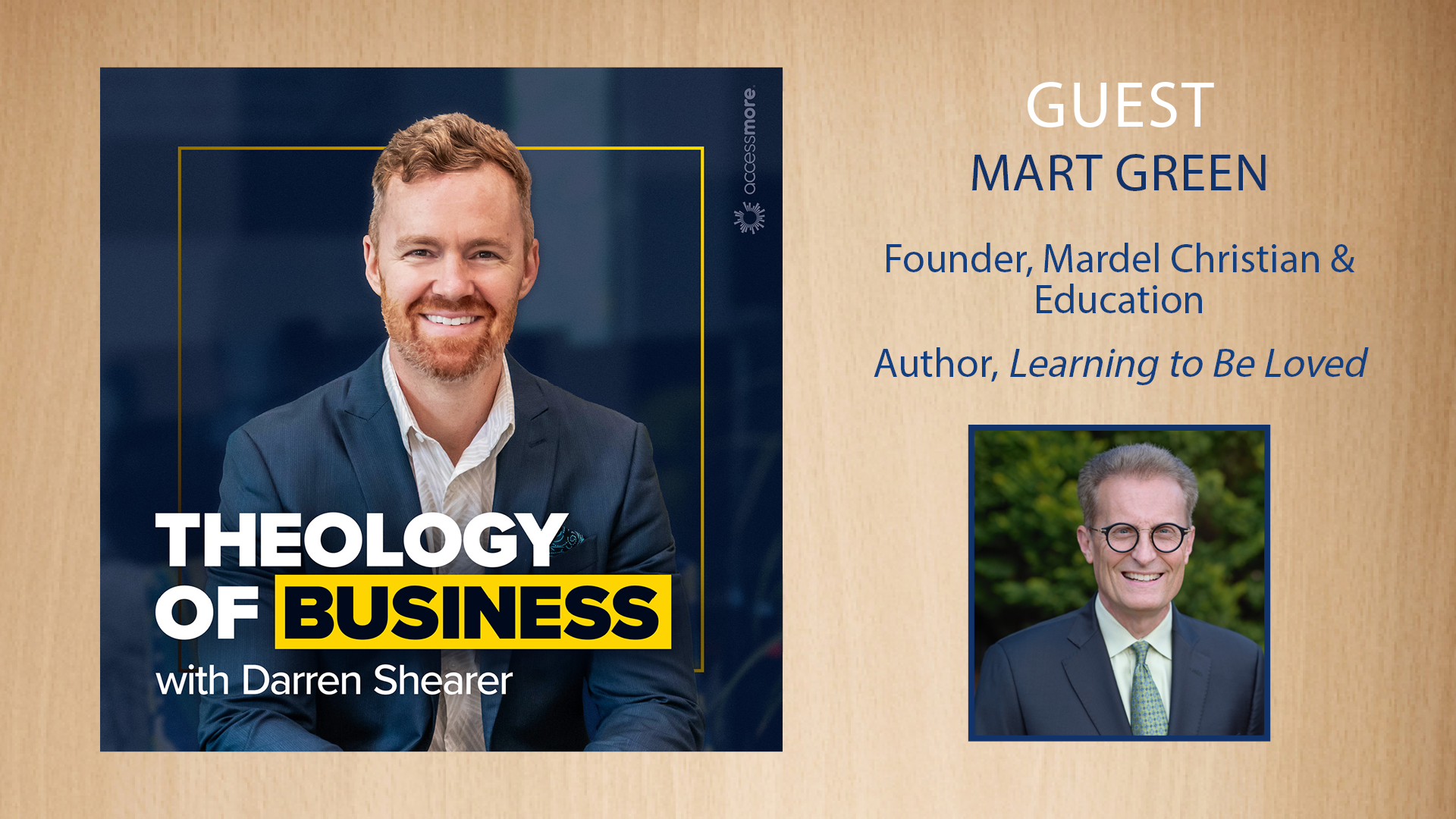
On this episode, Mart Green shares how he and the Green family aim to reflect God’s character and ways through the culture and operations of Hobby Lobby and Mardel.
Mart Green is the founder of Mardel Christian & Education. He is the Ministry Investment Officer for Hobby Lobby, a family business founded by his parents, David and Barbara Green, and he serves on the company’s board. In January 2005, Christian Retailing named Mart one of the top fifty people who have most shaped and impacted Christian retail in the last half century. Mart has been married to his wife, Diana, for over forty years. They have four adult children, three children-in-law, and thirteen grandchildren.
With a finish time of 2:58, Mart and his three sons are the “fastest family” in Oklahoma when it comes to running a marathon relay.
Mart is the co-author of the new book, Learning to Be Loved: The Everyday Believer’s Guide to a Rich Relationship with God.
Theology of Business is the show for marketplace Christians seeking to explore and apply God’s will for business. If you want to learn more about how to do business for the glory of God and shape culture through discipling the business world, this show is for you.
Full Episode Transcript
Heads up: This transcript was created with AI, so you might notice a few typos or small mistakes. We recommend listening to the episode for the best experience!
SPEAKER_00 0:04
Welcome to the Theology of Business Podcast, where marketplace Christians explore God’s will and ways for business. This show features conversations with today’s Christ-centered business leaders who are representing Christ faithfully in the business world. I’m your host, Darren Scheer, and if you want to make your work, leadership, and company’s culture more Christ-centered, you’ve come to the right place. On this episode, we’re joined by Mart Green. Mart is the founder of Mardell Christian and Education. He is the Ministry Investment Officer for Hobby Lobby, a family business which needs no introduction. But in case you don’t know, he was founded by his parents, David and Barbara Green, and he serves on the company’s board. In January 2005, Christian Retailing named Mart one of the top 50 people who have most shaped and impacted Christian retail in the last half century. And with a finish time of two hours and 58 minutes, Mart and his three sons are considered and hold the distinguished title of fastest family in Oklahoma when it comes to running a marathon relay. And Mart is also the co-author of the new book, Learning to Be Loved, The Everyday Believer’s Guide to a Rich Relationship with God. And I was just sharing with Mart, we share about Hobby Lobby again and again on this episode, because Mart and the Green family have set the standard when it comes to running a Christ-centered company for the glory of God. Mart, welcome to the Theology of Business Podcast.SPEAKER_01 1:48
Thank you, Darren. Looking forward to this time with you.SPEAKER_00 1:51
When did you first realize God wanted to be involved in your work and business?SPEAKER_01 1:55
Yeah, for me, um, it was kind of unusual, I guess. At nine years old, uh the family business started in their home. So for me, it was about making money for baseball cards. And so that’s what I uh I needed. So every for every uh frame that I glued, I got paid seven cents. I was nine, my brother was seven. My dad had just borrowed six hundred dollars um to start a business. He worked at a retail store and he had gotten so high up that he only got two days a month off every other week. And so he decided he that he wanted to be God, then family, and then work. And that wasn’t happening when you get two days a month off. So him and his buddy went down and they banks gave them the most money they thought they were worth, and that was$600. And you can’t start a retail shop on$600, but you can buy a chopper and some wood. So we chopped the wood and glued little mini frames, and for two years we sold those. And then in 1972, uh, we opened the first Hobby Lobby store. And it wasn’t until 1975, my mom worked for free for five years that my dad quit his job making 26,000 a year, cut it down to 13 to go to work for himself. So I guess for me, I always knew my dad, the reason he did business was because he wanted God to be first, family second, and work third. And it just wasn’t feeling that way the way he was. So it’s kind of almost ingrained, I suppose, and raised in a Christian home. Of course, you have to make your own decisions and do that. But we just saw, and what and my dad was a generous person, so we saw generosity very, very early on. So that’s kind of living your faith out. It wasn’t just some people are believers or say they’re believers, but don’t live that faith out, you know, in the way they did. But I I did see it strongly lived out. So for me, I just assumed everybody grew up the way I did, as I suppose most everybody does. You just assume everybody had the same parents you did, was raised the same way. So for me, fortunately, the I guess the theology of business was just uh classroom was waking up in the morning and going to the dinner table, the breakfast table, and the dinner table, and then and gluing frames. So uh I was very, very fortunate to have that kind of a witness in my life.SPEAKER_00 3:56
Yeah. So you never struggled with this idea that the only way it could really serve God is if I leave this business stuff and go to seminary and go start a church or something like that.SPEAKER_01 4:08
Yeah, now there again, my dad had an experience that really, really helped me. My dad’s mother was a tent revivalist with her father back in the 1930s, nearly a hundred years ago. Her and her dad would go out, pitch tents, preach, and one day this young man walked in, was raised to be a dancer, did not have a faith element in his life, walked to the tent for whatever reason and gave his heart to two people, Jesus and my grandmother. So they married and became co-pastors, had seven children in seven years. I can’t even imagine that. I mean, I said, no way. When my dad told me that one time, I’m like, there’s no way you can have seven children in seven years. And yeah, sure enough, they’re all I thought they’re all one year apart and they lost one childbirth. But uh, but mom and dad, hers mom and dad, you can only do three things, right? You could either be a pastor, a missionary, or an evangelist. Pretty much that’s the only occupations that everything else was way down there. So my dad did fill second class for many, many, many years. And then when he was about oh, 29, 30, so I would have been, I would have been young, you know, 19, 11. He went to a conference and they made a plea for some funding. So they needed some literature to put in other languages, other countries. And the guys they were needing$30,000. And the Holy Spirit prompted my dad that he’s supposed to give$30,000. And my my dad’s like, Wow, there’s no way. I there’s no way I can give$30,000. I’ve never given that much. You know, Hobby Lobby was just getting started. Um, so he went up to the guy and he says, Look, I think the Lord prompted me, but I’m not sure. And I I don’t have it, so I’m gonna give you four checks September, October, November, December,$7,500 each. Don’t cash those checks until I call you. But it’s kind of my faith gift. If I get it and God provides it, I’ll give it to you. So that was in Tennessee. He was on a plane back, and when he did, God just convicted him, you’re not second class, you’re anointed to be a businessman. Now I’d heard anointing with pastor, you can be anointed to be a van. I heard anointing with all those, but I really never heard anointing and businessman. But I saw my dad totally change after the day. He never felt second class to his brothers and sisters, who all were either evangelists, missionary, and pastors except him. He went from second class to anointed merchant. And so uh again, I got to see that happen live within my dad. And that helped me to say, I don’t have to look back. And there was not that same pressure on me to be a pastor missionary. Now, if that’s what God called me to do, then don’t go be in business. So it’s a it can be the opposite way. You don’t want to have somebody get in business if it got in fact and called them to do another ministry. So God’s got a plan in advance, right? The Bible tells us we just got to discover it.SPEAKER_00 6:50
That’s right. So was that initially kind of disappointing for your grandmother, grandfather, or was it pretty quickly that they realized, okay, God is really in this?SPEAKER_01 7:01
Yeah, my dad jokes a little bit, but it that when first time he was the youngest manager ever at the retail shop, you know, they had like six or seven other stores. He was the youngest manager ever. He called his mom and says, Mom, I’m the youngest manager ever. And she says, David, only what’s done for Christ will last. You know, and so then he was the youngest supervisor. So I’m gonna try again. Hey, mom, I’m the youngest supervisor ever. Only what’s done for Christ will last, you know. And so my dad would then say, if I call my mom and tell her I’m the president of the United States of America, I already know what she’s gonna say. So she was proud of him, of course. But I mean, just their mentality was that was just the ultimate. Eternity is the ultimate, and it is, but you also can do that in business, as we well know. And that’s why your show is called The Theology of Business, that business can, in fact, live their faith out and be a witness and do all the things that we can. But when you’re your parents are both pastors, they they just they were evangelists, they just wanted everybody to go to heaven, and they just want that that was their big passion.SPEAKER_00 7:57
Mark, what’s what’s a story, one of your favorite stories of when you saw God’s hand at work in your company?SPEAKER_01 8:03
Oh, wow.SPEAKER_00 8:04
I know there’ve been so many of them.SPEAKER_01 8:06
Yeah, well, I’m just trying to think of the first one. I remember my dad, we had two children, two boys, and our third son, we were pregnant with our third child in the mid-1980s when my dad called all the family together and we just we would eat meals together, so we didn’t think much about it. But he set us all down and he told us the family says, I don’t think Hobby Lobby is gonna make it. Uh that we had gone through an oil bust here in Oklahoma, we had gotten into fine art, gourmet food, suitcases. We’re in product that weren’t core to us, and so we were not doing well, and so he just felt like the business was closed down, and so so wow, and he felt terrible about that, right? Because all of his family, I have a brother and a sister, and my brother-in-law, so we all work in the business, and so and a cousin. So yeah, it wasn’t easy for him to share that. And um, he quotes me as saying, Well, dad, we’re not dependent upon you, we’re dependent upon God, and so that kept in my dad, right? Because he felt terrible for our sake, but we knew he wasn’t God, right? He provided a job and that was phenomenal, and all the witness he did. But if if Hobby Lobby had gone down, we’d have still trusted that God had something else for us. But my dad would just pray underneath his desk and one thing led to another. And it’s kind of one of those things you can’t even explain it. You look back and go, Man, we were so far in the hole, and we just went and did the next right thing. Just do the next right thing, do the next right thing. We’re not in charge of fruitfulness, we’re in charge of faithfulness. And so my dad was always faithful to the Lord. Uh, but I think it was what helped my dad because at one point he finally said, Well, here, God, you can have it. You know, like I’ve had this the whole time. My I got us here. God, you can have this thing. And I think it was my dad’s reminder, I’ve had this thing the whole time. You know, this is my business, it’s not your business. So it helped us kind of go from we’re owners, and sure, from the government’s point of view, the green family owns Hobby Lobby. We have to pay the taxes, we’re the owners, but we realize no, we’re really stewards. You know, we look at it from God’s point of view is we don’t own anything, we steward this. So, our responsibilities, how do we steward this really well? And so it was just neat for me to see my dad almost lose the business, realized it really was always God’s. And now, how do we run this on God’s principles? Which we always wanted to do, and we talked about that, but you know, right of life is still one of the three things that Satan uses, and uh he used it on us too. And we still have it, we got to fight it every single day, right? We got to die daily, and so uh, but we’re we’re trying to learn that one. And sometimes you got to go through some really, really hard lessons. Fortunately, I was in the second seat, not the front seat on that one. We got to see my dad learn the lesson, you know. Uh, but um, those are one of the times that uh we saw God’s hand on our yeah, and I’m I’m sure that really helped to grow your faith.SPEAKER_00 10:48
So fast forward decades later, and now you’re getting fined$1.3 million a day, right? By and and and when you win the case though, by one deciding vote, uh, when the Supreme Court says you don’t have to give out these abortion pills. Um, what was that? What was that experience like for you?SPEAKER_01 11:12
Yeah, it was uh, you know, we were just going along, we’re arts and crafts sellers, we don’t look at every law and keep track of all that. When um one of the legal firms came to us and said, Do you realize you’re getting ready to have to pay for a vote of facience when this law goes through? We said, Well, no, I we didn’t. I mean, obviously at some point we do. And they said, Well, would you be willing to uh file a lawsuit on this to protect your employees and protect your religious liberties? You know, we feel like we have the religious liberties and we believe that life starts at conception. Um, but these border faces take the life away and we had to provide them to our employees. And so we said, Well, can’t somebody else do that? You know, we’re not in the business of suing our government. We love our government, we live in a country that has given us the opportunities, but through a process and a time, so dad, again, we’ve only met as a family like this. We meet as a family for family reasons, but not for business reasons. I mean, except for those who are that work in the business. But we brought all those, those my children and just talked about say, hey, here’s what’s happening. And well, is there any way we could do this or that? And really there was no other way around it. So we said, yeah, we all agree as a family that life begins at conception, that uh we feel like abortafacious takes life, and so it’s against our religious liberty. So if we need to sue, then we’ll do that. And um, yeah, and then we went through it and we just had to say, you know, sometimes God delivers, sometimes he doesn’t. And so we don’t know, but we just trust God. And so in the end, we just had to settle. So for at first, again, because my dad is the at the in the highest position, he worried about it. But then at some point he finally said, you know, sometimes if it is you make a decision, it’s like 6040. You know, do you do this or do you not? I mean, they’re not, they’re not, you just don’t know. Well, do I do this? Do I use this uh computer system or this computer system? Well, it’s not a right or wrong decision. You just this computer system was 60 40. So you went with the 60% decision. But that starts saying, you know what? About a this life is a zero one hundred. It’s not a it wasn’t a 51-49. Oh, should we do this or not? Do it? No, no, we believe in life, and so then he just read us back to faithfulness. Our job is to be faithful. We’re uh we 100% feel this is our religious conviction, and so we just with that decision and said, God, whatever you want to do, let’s just walk this out. And uh yeah, we were sitting in our boardroom together when that we weren’t we’re at the Supreme Court when the decision was argued. Of course, the decision doesn’t come down that day, it’s several months later. Uh, and so we were together and uh heard the decision, and it was and we we knew it was gonna be a close decision, but it as you said, it was 5’4 that uh we don’t have to provide report aboard officials.SPEAKER_00 13:44
So so was it like a like a 60-40? We’re thinking there’s a 60% chance we might win this, 40% chance we might lose it. Like how how confident were you? I mean, certainly you put it all in God’s hands, but it it’s it sounded like there was a pretty good chance you could you could actually lose this case, and then the whole company has to shut down. Well, what was kind of the the odds you were playing, I guess.SPEAKER_01 14:13
Yeah, we didn’t know the odds were it’s probably gonna be five four. We just didn’t know it was gonna be five four in favor or against. That’s why we’re all in the room to listen because we didn’t know because some decisions the Supreme Court comes down and goes this way and that way. So, yeah, we had no guarantee at all. Um, and so but uh but it was a it was nice when it was five four and it was in our favor.SPEAKER_00 14:34
Yeah. Have you heard from other, I’m sure you’ve heard from other companies and how just that story in particular has inspired them? Like, what are is there a story that comes to mind of how you have inspired maybe another business owner that was kind of on the fence about taking a stand and then they saw what you did, and they’re like, We have to, we have to do, we have to go with God. I mean, no matter what may come, it’s like the Hebrew boys said, even if even if he doesn’t deliver us, we’re still not gonna bow.SPEAKER_01 15:09
Yeah, I’m trying, I can’t, I’m trying to think of one specifically, but we’ve had tons of people give us the at the high level. I don’t know exactly what they did with it, right? When they went back, hey, we want to live our faith out. We’re gonna be bolder because of your family, we’re gonna do this. So it’s always expiring, inspiring for us, and uh, because we do believe that we all can live our faith out, and we all need role models, right? Now we didn’t set out to be a role model, that wasn’t the reason we did it, all those things. But in in hindsight, you do see that, and others have stood. And whether it’s a cake baker, you know, that says, I’m not gonna bake a cake, you know, or the different ones that we’ve seen. So some of these have said, Hey, you guys gave us strength, thanks for doing that. And so it’s been fun to see others say, I’ve I’ve lived my faith out because I thought maybe I should just be silent and and not say anything. And everybody has to make those decisions, they’re they’re hard decisions sometimes, they’re not always cut and dry, even uh on what you do. But uh, we do live in a country that says we have these religious liberties, and so as long as we can continue to support those and when when they are infracted on, then we feel like it’s fine for us to defend those. And so there are different organizations out there that do defend religious liberties. Uh, there’s several of them. And so, and I’m thankful for them because uh there’s all kinds of issues we’re facing today that we’re trying to protect our religious liberties. And so all of us inspire others. When others stand up and they win their case, that inspires us too to say, yeah, our government so far we’ve been able to keep not every religious liberty we wanted, but we’ve been able to keep some of our religious liberties and let’s let’s keep standing for those and do it in a way that’s God honoring and uh honoring the people. And so, again, in our this case, it was those that are the most vulnerable, those that don’t have a voice, you know. Yeah, an unborn, an unborn child does not have a voice. And so for us, we felt like standing up for that. And uh, like you say, it does inspire others, which is is fine for us.SPEAKER_00 16:55
Yes. So Hobby Lobby, as most most of us know, is closed on Sundays, even though Michael’s and you know the other competitors are still gonna be open on Sundays. You’re you’re paying twice the minimum wage to your employees, is your compensation philosophy for the company. Um, I’ve heard things like, uh and people will notice this going in to Hobby Lobby this time of year, you’re not gonna see the Halloween decor, which I really appreciate as having three small children, having to walk into some of these places, and there’s you know, demons yelling at them and growling at them. Um, so thank you for all of that. What’s another one of the maybe lesser known best business practices that helps you and the culture of your companies to reflect God’s character in ways that maybe a lot of doesn’t doesn’t really get uh as as much notice?SPEAKER_01 18:01
Yeah, great question. Uh a lot of our employees are here in Oklahoma City. We service all thousand stores here in Oklahoma City. So we have about 6,000 of our employees on the corner where I’m standing right now. So uh we have about seven chaplains on staff, and so we teach all kinds of classes throughout the week. So if they want something on marriage, finances, those things, or when they lose a loved one or something happens, obviously we’re there to be a chaplain and all that. So it’s a service. We have a we don’t have them for all the stores, right? But we have it here in Oklahoma City, so they help service a big part of our our staff that’s here. We also have a uh far a uh medical clinic here that if they are on the insurance and they get to go to for free, but it’s right on campus. But so it’s a convenience, you know, they don’t have to drive somewhere, drive back, it’s right here on campus. They go there. We don’t have there’s no there’s no copay.SPEAKER_00 18:51
They you have like an x-ray machine and and MRI and there, yeah, yeah.SPEAKER_01 18:57
Have a little pharmacy right next door. So it’s just convenient, you know, for a lot of people not to have to to go other places. It saves them money, saves some time, inconvenience. And so those are those are services that we try to do that, you know, we think are holistic. You know, we we do believe in the whole person, right? We we do believe the most important is your spirit because it lasts for eternity. I’m gonna get a new body. That’s exciting, right? Because I just you know had to have a knee surgery, right? The torn meniscus, right? I’m ready for a new body. I was I’m a runner and and now I’m I can’t run like I used to. So I got a new body coming, but what lived inside of me, what is eternal, is my spirit. It lives forever. Once a child is conceived, that’s why conception is so important to us, we believe an eternal being has been created that will live forever. So, yes, that’s what we care about first. But yes, obviously you want to take care of people’s physical needs, emotional needs, spiritual needs. And so uh those are some of the things that we would try to do and just live our faith out. You don’t have to be a Christian to work at Hobby Lobby, not all of our team members, not all of our managers are Christians themselves, but uh they know we they work for a Christian company and we have certain standards that we expect them to keep up with. They don’t have to serve Jesus, that’s not the question. But we hope that we live a faith out. I mean, we think an incarnational faith. So we hope that people who live here may say, yeah, it’s a little different here than where I work somewhere else. And what is that? Well, we think part of it, hopefully at some point they kind of figure out well, maybe, maybe this Jesus fellow that they talk about and they follow, maybe maybe he’s a difference maker in what they feel, the peace they have, the joy they have, the outlook on life.SPEAKER_00 20:25
So those are is that a fairly regular occurrence that um people will ask those questions during the workday?SPEAKER_01 20:33
Yeah, yeah, that’s why they come to chaplains and we’ve had people get saved through this process here. And um, so it’s been fun to see we play Christian music. I mean, usually it’s just the instrumental, but I have so many people. Oh, I just go in Hobby Lobby because they know sometimes they know the words to the song, right? But they hear it, they hear the instrumental and they go, it just calms my spirit, you know, yeah, and that’s so even you’re creating an environment that people may not even understand. But when we go to Hobby Lobby, there’s a peaceful, they may just think it’s because the colors or like merchandise or whatever, but it’s maybe maybe it’s all of those things, right?SPEAKER_00 21:05
We do want to have beautiful stores, we want to have music that may be more calming than aggressive, or like you say, demons coming at you for Halloween merchandise when it comes out, and so uh well that you know that music is such a powerful thing, you know, because I you know, there’s there’s some establishments that have kind of been known for playing Christian music, and then some of their locations you go into, and they’re not playing Christian music, and it makes it it makes a difference, you know. And my my sister-in-law is a chiropractor for a pretty big box chain of chiropractic um clinics, and she started there not long ago, and you know, they were just playing this music that was just really um just just kind of bringing her down spiritually. And and she just all of a sudden, the Lord just was like, Well, why don’t you do something about it? And she just said, You know, all right, we’re gonna turn the music. Off, you know, if we’re not gonna have something that’s gonna like because at the by the end of the day, you know, if you just can imagine how many people she’s having to treat and do adjustments on, she’s just getting worn out on top of that, like listening to music that’s just like brushing her spirit throughout the day. Um, you know, that’s just one of those tools that especially if you have influence in a in a uh a company, which you do, or they wouldn’t be paying you, um, maybe go advocate for some better music to be played, you know, or maybe even just switch it over to instrumental. Like let’s let’s start there. Um, so I’m glad you brought up the the music part. And you also mentioned the classes you’re teaching, and and you are uh an author and you are teaching. And I’m curious from your new book, Learning to Be Loved, The Everyday Believer’s Guide to a Rich Relationship with God. What’s something from this book that you teach to the team members at your company and and how do you go about imparting that? Certainly through the the culture as a whole, I don’t think there’s anything that influences people more profoundly, uh, at least for working age adults, than the company that they that they work in, because they spend most of their waking hours there. Um, but what’s something from this book that you teach to your team members?SPEAKER_01 23:20
Yeah, I’m gonna give a little backstory on how the book got started because I don’t think it’ll lead me into that, uh, Darren. So David Bowden is a young fellow here in Oklahoma City that I saw him very talented, and me and my wife came alongside him and said, Hey, we’d like to help you in your profession. He was a spoken word poet, but he was doing it on the side. So we got a relationship with him over the last 10, 12 years. And one day he came up to me, and our family mission statement is to love God intimately and live extravagant generosity. Love God intimately, live extravagant generosity. We have a mission statement for Hobby Lobby other places, but we want to have one for the Green family. So about 15 years ago, we sat down to have that. So I have a document called uh the gateways of intimacy. So I have 31 different ways that I have gotten intimate with the Lord. And so I got a little document, and it’s called Gateways of Intimacy. It’s a little, it’s a four-page little pamphlet, right? Just four pages. So I’d give one to David, we’d had a conversation about something. He said, Well, give me that gateways document. So I said, Okay, yeah, here it is. And I have a verse, I have a song, because songs are important to me and the word. How do you get close? Some of them are very obvious. You get close through God’s word, you get through prayer, through songs, some of them are through nature. There’s other things, there’s 31 ways that I thought, wow, I felt close to the Lord. So one day David came to me and said, Mart, I I really had a struggle with intimacy with God because I always felt like I had to earn it. I just felt like I had to do something. I had to, you know, and then if I did something bad, I had to go get in the corner and God didn’t love me anymore. He says, My son tells me he loves me. And I’m like, Yeah, you do, but you’re not going to someday. You know, he couldn’t accept love. He says, But when I talk to you and you talk about your stories, they’re always like God’s kind of chasing you down. And I said, Well, I didn’t kind of thought about that way, but I said, Yeah, something happened in my life that I learned that God is chasing me down. It’s and one of the things that we say in this book that we’re trying to get people to understand is there’s gateways or doorways to intimacy. You don’t have to go in them to find God, He’s already at that gateway. You just got to show up. Yeah, you just show up and you have the right spirit and nature, God can speak to you there at different times. He doesn’t speak to me every time, every day, all the time, but these are places. And so, um, so he asked me, Hey, would you come? And so he wrote most of the book. He’s a theologian and it writes the theology depart. I got to write 20 stories of you know, intimate when I felt really intimate with God and I felt like God was chasing me down. Because once you know that you’re loved, then you can love others, and really that’s where your best love flows. So, what do we want our employees to understand here? That you are loved by God. And then once you’re loved by God, you can give that love out. When you’re not sure whether God loves you or not, and you make a mistake and you think, well, I’m gonna forget that I wonder if God loves me anymore. Is he a vindictive God and all those uh things? No, no, God loves you. He’s got a plan for your life. No matter what you’ve done, ever done, you can start now. Yes, you may not have been on God’s plan. Obviously, you don’t feel like you’re on God’s plan, right? But you want to get on that plan. He’s got a new plan for you every single day. If you want to start that journey, he wrote a love letter to you. It’s called the Bible. And if you’ll go to that and read it like a love letter, it will speak to you. I’m telling you, it’s unbelievable, you know, uh what will happen. So that’s my passion is that people would understand, get into the love letter, understand it for themselves, read it like a love letter that’s for them. And then once they start living that faith out, I’m just telling you, God is going to show up in different ways in different places that’ll be stunning, have been stunning for me. And so that’s what we want the people to know. You can have a rich relationship with God, an intimacy with God that maybe you don’t think you can have. And so many of us, even though we know it’s a faith element, we know we we get saved by faith, we still feel like we got to do works to earn his love. Yeah, and we don’t right now. We want to do good things for the Lord and we because we serve him, we love him. But I I I love my wife, you know, no matter what she does, I’m gonna love my wife, and that that’s not gonna change. And God’s love for us is not gonna change either.SPEAKER_00 27:10
Yeah. Do you think part of the problem is that people would say, Well, I believe he loves me. I just don’t think I just don’t believe he trusts me. It’s like he loves me like you love your, you know, the the crazy member of your family, you know, or or the guy that’s always screwing up. It’s like, ah, there he goes again, you know. Not actually, you would never feel like you can entrust anything to that person. Do you do you find people really are struggling with that, like a sense that that God actually doesn’t not only does he love me, but he trusts me.SPEAKER_01 27:48
Yeah, yeah, that’s a good word to use. I’ve I’ve I’ve used the word sometimes like you, not as he love you, but he likes you, right? Because sometimes we go, well, I love you, but I don’t like you. So that I think that’s in the same camp of of trust. And so, yes, because we think we’re having to earn things. And really, I believe that when we it’s a relational response. So generosity, let’s take generosity. When somebody’s generous, and you can be generous with your time, your talent, your trade, there’s lots of things to be generous with. When you’re really generous toward others, it’s out of a out of relationship. It’s out of relationship that you give back. So that’s what I want people to understand. No, God loves you so much that when you understand how much he loves you, you will just naturally start giving things, whether it’s of yourself, of your time, whether it’s of your attention, listening to somebody. Sometimes people just need a listening ear, yeah, you know, or sometimes it is financially, just like my dad felt convicted to give some money. That’s what he felt. And he obeyed that. And when he did, then it wasn’t, I mean, on the same plane back when he made a faith gift that scared him to death, that he just felt like the Lord spoke into his spirit. You’re not second class. I love you as a businessman. You’re anointed to be a merchant. Just go do that, you know. And so my dad, now 60 years later, or 50 years later, because that happened when he was 30, he’s 80 now. 50 years later, he still lives on the moment that that happened, which happened after generosity. So I say, generosity is one of those gateways in me. You show me somebody, like my grandmother, who is a widow’s mites giver. If she got two dresses, she’d give one away, right? Because the three boys were in a bed, three girls in a bedroom, mom and dad were in the uh living room, and the three boys were in the kitchen. So that’s the way my dad was raised, six schools. So you get it, right? Didn’t have a lot of money. But my grandmother was a giver. I mean, people think, no, no, when I get money, I’ll give. No, no, no, no. That’s not the way generosity works. Generosity is for everybody, you know. If you gave my grandmother a Christmas gift, she’d figure out its value and pay her tithes on it because she wanted to give God of the increase that she got. Now it wasn’t legalistic, it’s because she had a love for Jesus. She just loved him so much that she wanted to give and she felt the 10% and she didn’t try to figure out pre-tax or post-tax. She’s had an under income, you know, even though my dad didn’t have shoes to go to school in. So it’s that relational response. When you have that, then you don’t worry about does he trust me, does he like me? He loves you, he likes you, he trusts you. All of those words. It’s just how how how can we receive that? And we’re saying, man, there’s all these gateways. So, and there’s 20 of them that are listed in the book, and we talk through those so that people can say, Well, okay, let me let me see. Has God ever been close to me in those moments? Because we say they’re thin spaces, these are thin spaces where God shows up.SPEAKER_00 30:17
Yeah. And um, so so are you teaching any of this? In what ways are you imparting this to the team members there at Hobby Lobby, Mardell? And and is that a is that a challenge to do as the senior leader of the company, uh, to to talk to your people about loving God more?SPEAKER_01 30:40
And yeah, I think we do that. I don’t, I can’t personally touch all of them. We got so many employees, obviously, is what I’m saying. So I don’t teach in the classes that we have. We have people that are in finances and marriage and love. And so I’m gonna say that’s done. And then through living right our life out, and then we try to expose our our staff. Once a month, we have a uh staff meeting here for the leadership, and we bring in different speakers. So Willie Robertson will be in here tomorrow. So he’ll be talking about his life, living his faith out and all that. So we try to bring different speakers in from different angles, right? Because I I haven’t I don’t have ever live experienced. I’ve never been a female, right? I don’t have that live experience. So we have females come in, we have people of different uh financial situations, different skin colors, different businesses, right? We’re a retail business, but there’s we’ve had Chick-fil-A come in and speak to us, right? Because they have a different worldview. But we believe that talks for our employees. So what we’re trying to do is bring different speakers in, people that they can hear, that have a different lived life. Um, because we all do. And some of us have gone through some horrific things. Some of us have lost, I have not. Some of our employees have lost children, right? I’ve never experienced the loss of a child. I haven’t lost, I haven’t spent the loss of my parents yet. I said both my parents are alive. You know, I my grandparents, I didn’t know that well. But there are people every day, right? I mean, you have 50,000 employees who have that. So, how do we provide ministry to them that God loves them even during those tragic times? So, some of it’s uh all those situations.SPEAKER_00 32:01
So yeah. And I guess what I’m asking is for your for your inner circle, you know, we all have an inner circle in business of of peers, of direct reports, people that we’re really spending the most time with in the business, um, in the in the business context. And we try to encourage people to really, really take advantage of that opportunity to disciple, you know, not in a in a in a way that’s going to create a hostile work environment or something like that and make them feel like if they don’t um, you know, start reading the Bible, they’re gonna lose their job, you know, these these kinds of things. But do you sense that you have a responsibility to impart truth to your to your team member, kind of your inner circle there at the company? Or is that something really more to be left to the to the chaplains or to their pastors? Um, how do you navigate that?SPEAKER_01 32:56
No, to my immediate team, they they would hear and all know all about gateways of innocent. Now, the book’s not even out yet, so but but they all got a copy of it, you know, because I just got my my pre-release copy. So the gateways of intimacy is how they would hear me speak about it because the gateways of intimacy led to the book. So I took 20 of the 31. So they would know the 31, the different ones that I have. And some of them I take one every day. Today’s the third, right? Well, uh, glorifying God in song is my third one. And so today I listened to the song that went with it. I read the verse again today and just remembered that because there happens to be 31 days in the month. Now, when I get my 32nd, you know, interview with God, I don’t I don’t know what I’m gonna do. I just right now it’s convenient because I have 31 of them. And so, yes, all of them would know that that’s my passion and the and it hasn’t it has it’s fruit in other ways. So, like when I hear God’s voice, I came up with a document really it’s five and a half by eight and a half. It’s called HS the power four. So, and I’ve talked to them about when you have holy surrender, when you’ve wholly surrendered your life to the Lord, and these three HS the power threes happen when the Holy Scripture, the Holy Spirit, and a holy sign all line up, you know God’s speaking to you. So that doesn’t happen to me every day. Matter of fact, I’m glad it doesn’t, because usually when it happens, it takes me like 10 years to take care of that one, right? And so I’m trying to train them that that with the enemies of God, you will hear from him. Sometimes it’s through the scripture, right? And everything will match back to the scripture, right? If a Holy Spirit, if some if I get a prompting and it doesn’t match the Bible, that’s not from the Holy Spirit, right? It will line up, and so I believe strongly in that. But how do you look through that? How do you do that? So I just put out a new document, it has about to do these people’s identity. So I’m trying to train that. They wouldn’t be our employees, but they’re people of influence that we can have. They bring about seven or eight groups of CEOs in here, about 30 at a time, eight or nine times. They’ll spend 24 hours with our family. It’s called a day with David. That’s my dad’s name. So my dad speaks, I speak, my brother speaks, and then usually a gen three speaks. So these are businessmen, women that are over their businesses or CFOs or at different positions that really want to live their faith out. Well, how do you do that? Well, we come in here and we share about stewardship, we share about it, you know, stewardship versus ownership, and uh eternity versus temporal. Those are two big, big lessons that we share, and then generosity. And we’re not we’re not we’re not raising money for anything, we’re just trying to get people to be more generous because we think when you’re more generous, then you’re living the lifestyle. If people are reading God’s word and they’re giving, I go to the next one because they’re already discipled. Because when you start giving your stuff away, you understand money has no hold on you anymore. Yeah, you just like my grandmother. No hold. The pride of life, how do you do that? You be generous. That’s how you defeat. If you want to defeat the pride of life, I mean, I’m sorry, the lust of the eyes, you be generous. The pride of life, you be humble. All right. And so, uh, so those are the thin things we do. So we’re able to, and there’s been hundreds of millions of dollars that have changed hands and been given differently. And even we try to get people to give it away sooner rather than later. God gave that wealth to you. Water gets stinky when it stays, let it flow through you. God will provide more later. So, and you got to plan your giving. I mean, uh, people make five-year commitments and all those kind of things, but sometimes we get money stuck in our donor-revised funds and they got their tax rod off, but it’s still sitting there, and we’re like, no, no, no, get it to use, get get get it to use. So, so anyway, so that would not be our employees, but they’re people of influence that come in that then they go back and influence their employees. So that’s something that we’re able to do at a little at that level, besides the staff I have. Obviously, I do have my direct staff, I don’t direct all 6,000 around here. So sure.SPEAKER_00 36:22
Yeah, I a lot of the questions that we get have to do with folks that work in um companies that are not necessarily Christ-centered, and they’re trying to figure out how do we navigate disciple making and living out our faith and not just keeping our faith to ourselves, but also inviting other people into um a relationship, a deeper relationship with Christ is as you’re doing. And how do we do that without um getting into legal trouble? I mean, you might get into legal trouble. Um, you’ve gotten into you guys have gotten into some legal trouble. Um and and and so as we wrap it up here, what would be your parting advice to the business leaders who are listening who are wanting to know how do I how do I disciple my coworkers? And and certainly that it starts with us um being disciples ourselves and cultivating that intimacy with Christ uh ourselves. But then how do we invite other people into this into this journey as well in the workplace?SPEAKER_01 37:26
Yeah, obviously we talked about lots of them living your faith out of all that. But when I was at at Mardale and I had a larger the staff there, I just I had a Bible study before school started. I mean, school started before work started. Uh school too, hey yeah, yeah. No, a bunch of grandkids just wouldn’t get away.SPEAKER_00 37:41
Work is as a schoolhouse for sure.SPEAKER_01 37:43
Yeah, people were 13, but my grandkids all going back to school. So before the work hour, I’d just come in and volunteer just so they would know what my faith was. Open the Bible. Not everybody came. I didn’t have room for everybody to come, but you could do that. And then and then maybe somebody else then when I left, somebody else held that Bible study when I came to help uh Habila more. And so uh I think there’s but living the faith out, uh taking care of your employees again is are those things. And um, yeah, we have still lots of freedoms in our country that you can do things. We we actually, when we bring our co-managers in, we actually make an ask if they want to have receive Jesus in their in their hearts, and so we we actually give a salvation message. We don’t do that every day, every meeting. But when there’s guys come in from other parts of the country, because people know we live our faith out. We don’t, again, they don’t have to live our faith out. They get to live, we respect them uh and what they want to do, but we want to live our faith out and say we do feel that uh Jesus is the answer, and that’s where we get our peace, where we get our joy and our happiness. And uh, so yes, exciting to said.SPEAKER_00 38:44
Well, learning to be loved, the everyday believer’s guide to a rich relationship with God is the book. And um, maybe a next step people could take, get the book and and get a group of folks from your workplace together at lunchtime and go through the book, you know, talk about these things and they hey these these are lessons that are that are coming from one of the the the most effective merchants of our of our day, Mark Green. And so this is not coming from somebody that’s uh a full-time uh church worker, but somebody that’s right there in the thick of it in the marketplace. And and and so how can we live this out, how live out our Christian faith and invite Jesus into our into our lives and our work? And this book is a great way to go about doing that. Um, Mark, thank you so much for spending time with our listeners. Anything else you want to say about how people can hear more from you and um any any other calls to action you want to leave us with?SPEAKER_01 39:49
Yeah, there’s a markgreen.net uh website that you can go to and it has the books there, but there’s also some pamphlets that I’ve done that are totally free. If you want one, we’ll send it to you. You can download it. So I have a GHI document talking about the three character traits I think people should have, some of the things we didn’t have time to cover today, but they’ll they can see them and it’s markgreen.net. And uh I listened into prayer. I I every morning I have a scripture, I send it to my kids. I have six or seven guys that I hold myself accountable to. I have six or seven people that I’m mentoring. So I share this verse with them every day. And so if you don’t mind, I’d love just to pray us out with this verse. And so I know it’s kind of appropriate, actually. So this book, I say, and all my emails with this book is alive. So I was in first Kings 7, 13, and 14, it says, King Solomon sent to Tyre and brought Hiram, who was filled with wisdom, with understanding, and with knowledge to do all kinds of bronze work. He came to King Solomon and did all the work assigned to him. And the commentary I put with it was Hiram, a skilled craftsman from Tyre, used his talents to create the intricate bronze works for the temple. This shows us the value of using our God-given skills and talents for God’s glory. Whatever our skills, be it in craftsmanship, leadership, teaching, or any other area, we should strive to use them to honor God and serve his purposes. Our talents are gifts from God, and using them for his glory is a way of showing gratitude and reverence. So, Lord, we just thank you. Even in this verse, as we’ve talked today about it, everybody’s called, every different skill that you give us, Lord, not just the evangelists and the preachers and the missionaries. Yeah, we hold those at high value. We need those, Lord. Thank you for calling people, but thank you for calling craftsmen for leadership. And even in the in the in the Bible, you talked about Solomon built this beautiful temple for you. Well, it took craftsmen to build a beautiful temple, and they did it with excellence. So, Lord, help us to do our work with excellence and honoring you, and we pray everything that we do, we bring you glory.SPEAKER_00 41:39
Amen. Amen. Amen. Thank you, Mart. Thank you for this conversation, for uh blessing me and our listeners with your wisdom and your heart today. All right. Thank you, Darren. Thanks for listening to this episode of the Theology of Business Podcast. Be sure to subscribe, leave a review, and tune in for the next episode as we continue exploring God’s will and ways for business.
BIG THANKS to this episode’s sponsor: High Bridge Books
High Bridge Books helps Christ-centered authors build a legacy by crafting and publishing messages and stories that glorify God in all spheres of culture.
- High Bridge Books’ professional book publishing package: https://www.highbridgebooks.com/publishing/
- High Bridge Books’ proofreading, line editing, developmental editing, and co-writing services: https://www.highbridgebooks.com/editing-and-proofreading/
- Examples of our books: https://www.highbridgebooks.com/bookstore/
We’re extremely proud that …
- 45% percent of our 204 books under contract were written by authors who have published more than one book with us, and
- 51% percent of our books under contract were referred to us by authors who have previously published with us.
Contact High Bridge Books’ CEO Darren Shearer at [email protected] to get a conversation going about your book!